
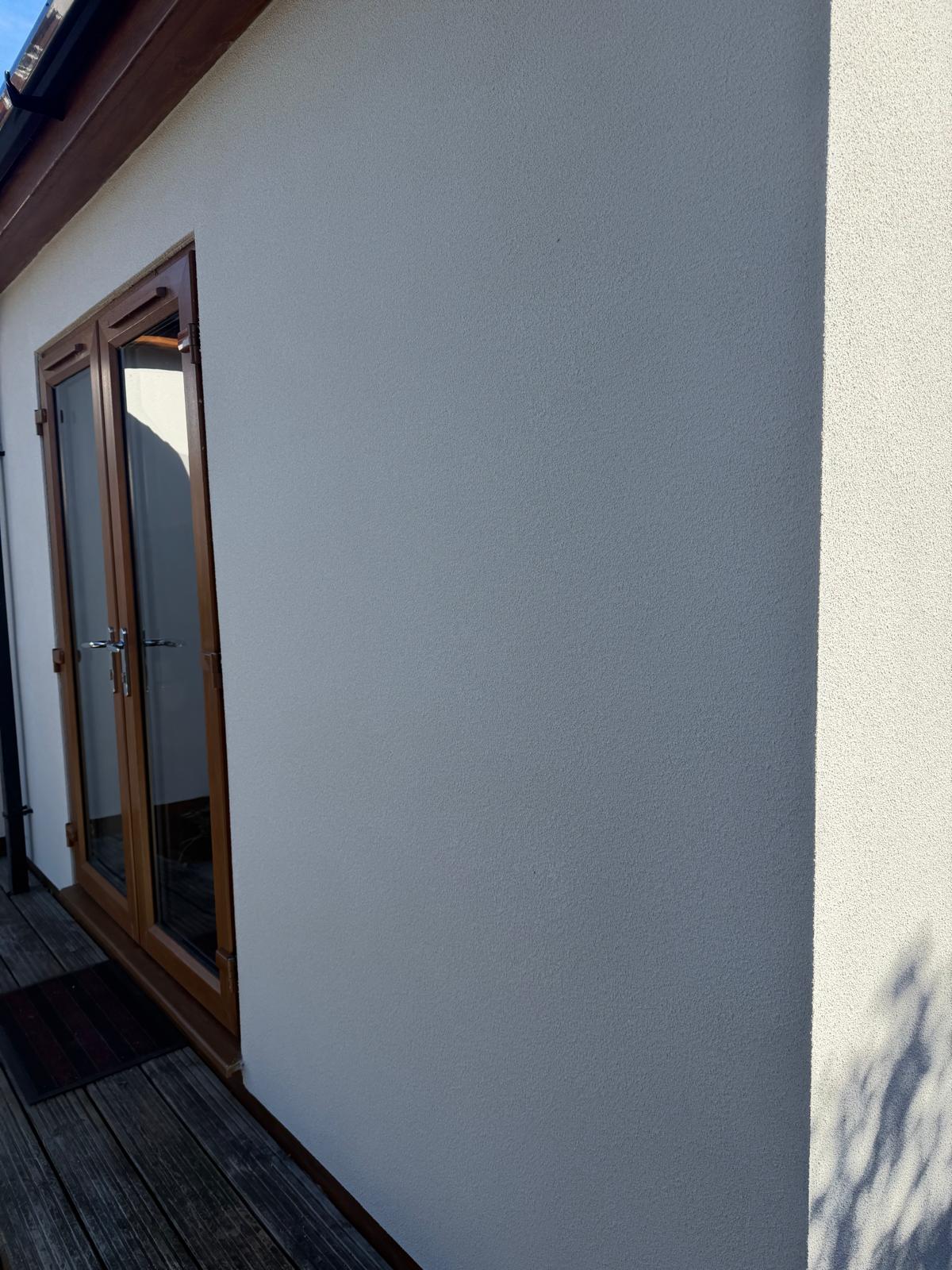
Silicone RenderingA Considered External FinishFor Farnborough Properties
Explore a thin-coat finish with the right supporting layers, rather than treating the decorative coat as the whole system.
27 years in the trade · 1-year workmanship guarantee · Free quotations
27 years
in the building trade
15 years
running his own business
Checkatrade
member since January 2014
1-year guarantee
on workmanship
Free
inspections & quotations
Service overview
A silicone finish needs a suitable system underneath
Silicone rendering usually means a thin decorative finish containing silicone resin, applied over a compatible prepared background. It is not simply a thicker version of masonry paint, and the finishing coat alone cannot correct loose render or uneven masonry. The base layers, reinforcement, primer where required and edge details work together. Understanding those components helps you compare proposals that might otherwise appear identical.
A silicone finish can combine water repellency with vapour permeability, depending on the product and overall construction. That does not mean it waterproofs every wall, prevents all algae or removes the need for maintenance. Gutters, sills and junctions still need to shed water correctly. Suitability depends on what is already present and whether the proposed layers are compatible with that background.
Restoreworks Ltd offers free inspections and quotations for silicone rendering in Farnborough and its listed surrounding service areas. Robert, known as Robbie, Flanagan runs the business and has 27 years in the building trade, including running crews for London-based companies. His training includes plastering at Gold Trowel Academy and modern rendering with Weber Saint-Gobain. This training is not a claim of manufacturer approval or accreditation.
Who it's for
- Homeowners considering a textured coloured finish for suitable external walls.
- Owners replacing deteriorated coatings on a modern masonry property.
- Landlords seeking a planned approach to external appearance and maintenance.
- Commercial managers assessing finishes for occupied buildings.
- Owners comparing thin-coat silicone systems with monocouche or painted render.
Signs you need it
- Existing decorative coatings are patchy, tired or repeatedly repaired.
- A refurbishment calls for a consistent finish across an elevation.
- Surface dirt highlights irregularities around poorly formed details.
- A suitable background needs a new decorative rendering system.
- You need advice on whether existing render can remain beneath new layers.
Why some silicone finishes disappoint
The visible texture is only one part of performance. Background defects, incomplete specifications and poor water management can undermine a finish regardless of its colour or product description.
A sound-looking surface with weak layers beneath
Old paint or render may appear intact while losing adhesion underneath. Applying fresh layers can add weight to an unreliable background. Inspection should consider what supports the new system, not merely whether the existing wall looks reasonably flat. Unsound material needs an appropriate response before decoration begins.
Water running repeatedly over the same areas
Leaking gutters, short sills or missing drips can concentrate water and dirt on a new finish. Water repellency does not make those defects harmless. The result can be persistent staining or conditions that encourage biological growth, particularly on shaded elevations where surfaces remain damp for longer.
Visible joints and inconsistent texture
Thin-coat finishes depend on controlled application and an even supporting surface. Interruptions across a continuous face, inconsistent working methods or unsuitable weather can leave noticeable changes. Elevation layout and practical stopping points should be considered before work starts, rather than improvised halfway across a wall.
Movement beyond what the system can manage
Some flexibility can help accommodate small stresses, but a silicone finish cannot prevent structural movement or bridge every crack indefinitely. Existing movement joints and material changes need attention. Recurring cracks should be investigated so that a decorative coating is not mistaken for a structural repair.
Common mistakes to avoid
Buying a topcoat without understanding the layers
Ask what sits beneath the decorative finish and why each layer is suitable. A proposal should explain background preparation, reinforcement and primers where required. Comparing only the named topcoat misses the parts that establish adhesion, flatness and compatibility across the wall.
Assuming coloured render never needs cleaning
A coloured finish can reduce reliance on regular repainting, but airborne dirt, algae and splash marks remain possible. Exposure and detailing affect appearance over time. Aggressive cleaning may damage the texture, so establish suitable care methods instead of assuming a pressure washer is always appropriate.
Choosing colour from a screen alone
Texture, daylight and neighbouring materials can alter how a colour looks. View a physical sample where possible and consider the full elevation, not just a small close-up. Very light and very dark colours can show different marks, making practical expectations as important as preference.
How it works
Our silicone rendering process
- 01
1. Inspect the wall and discuss expectations
The free inspection considers the existing finish, signs of moisture, access and the appearance you want. Explain any earlier coating failures and where stains return after cleaning. Those details help establish whether the issue is primarily decorative or whether water management and background repairs must come first.
- 02
2. Define the proposed rendering system
The quotation should identify the scope rather than simply describe the work as silicone rendering. Discuss preparation, supporting layers, reinforcement, finish and relevant junctions. Cost depends on inspection. Confirm what is included around downpipes, windows and other interruptions so there are fewer assumptions when work begins.
- 03
3. Prepare the background and details
Unsound coatings are addressed and the substrate is prepared for the selected system. Depending on its requirements, this can include repairs, cleaning, profiles and measures to regulate the background. Protect surrounding surfaces and agree access arrangements. Preparation should leave a suitable base, not just a cleaner-looking wall.
- 04
4. Apply supporting layers and finish
The specified base layers and reinforcement are installed before the decorative finish, with primer where the system requires it. Drying intervals and weather limits must be respected. Texture is formed using the appropriate method, with the work organised around sensible elevation boundaries and consistent application conditions.
- 05
5. Review appearance and ongoing care
Discuss the completed finish, initial curing precautions and cleaning guidance. Keep the colour and product information where available for future maintenance. Restoreworks provides a one-year workmanship guarantee, with payment by bank transfer. Report concerns clearly rather than attempting an incompatible patch repair while the cause remains uncertain.
What you get
The benefits of silicone rendering done properly
A consistent decorative texture
A thin-coat finish can give suitable elevations a more unified appearance. The result depends on preparation and application as well as the chosen grain size, so sample texture should be considered alongside colour.
Water-repellent surface characteristics
Silicone-containing finishes can help rainwater shed from the surface. They still rely on sound junctions and appropriate wall construction, and should not be described as a cure for leaks entering from defective roofs or gutters.
Vapour permeability within a suitable specification
Many silicone finishes allow water vapour to pass through, but the complete wall build-up matters. An unsuitable underlying layer can restrict drying even if the final coat has favourable vapour permeability characteristics.
Factory-coloured finish options
Colour incorporated into the decorative finish offers an alternative to a separately painted surface. Future cleaning or refurbishment may still be needed, and matching later repairs precisely can be difficult after weathering and exposure.
A finish adaptable to different elevations
Texture and colour choices can suit contemporary extensions or broader refurbishments. Exposed corners, shaded walls and splash-prone areas deserve particular thought so that appearance is balanced with the way the building is used.
Clearer long-term maintenance planning
Recording the installed system makes later decisions easier. Compatible cleaners and repair materials are preferable to improvised treatments, especially where an isolated stain or impact mark might otherwise prompt unnecessary work across an entire wall.
In detail
Understanding silicone materials and application choices
Silicone, acrylic and mineral finishes are not identical
Decorative renders can use different binders and blends, with varying surface characteristics and application requirements. The word silicone alone does not establish suitability. Ask about the complete specification, including how it connects to the existing background and what limitations apply to the particular construction.
A thin-coat silicone finish is also different from a scraped monocouche render. Its appearance comes from a comparatively thin textured coat over supporting layers. Neither approach is automatically better for every project; substrate, desired texture, exposure and future maintenance should shape the choice.
Base coats, mesh and compatible preparation
The base coat helps provide a suitable supporting surface, while reinforcing mesh can distribute stresses within the specified system. Mesh positioning, overlaps and local reinforcement depend on the system requirements. Adding mesh casually does not turn an unstable or detached background into a dependable base.
Some backgrounds need particular preparation to manage suction or provide an appropriate key. Existing painted surfaces require careful assessment rather than an assumption that primer resolves every adhesion concern. Combining unrelated products without checking compatibility can create uncertainty about how the layers will behave together.
Exposure, texture and practical detailing
A sheltered entrance and an exposed gable experience different wetting, drying and soiling patterns. North-facing or shaded areas can remain damp longer, while lower sections may receive splashback. These situations affect maintenance expectations even when the same material is used across the property.
Texture changes the way light and dirt appear on the surface. Neat stops around openings, effective drips and a suitable termination near ground level matter as much as the main wall finish. Rendering must not obstruct ventilation or be used to disguise defective adjoining components.
Homes, rental properties and commercial premises
Residential work needs a practical plan for access, protecting windows and managing outdoor areas while layers dry. Discuss pets, frequently used doors and narrow side passages before agreeing the programme. Existing insulation systems need particular compatibility checks; applying a silicone finish does not itself mean insulation is included.
Commercial premises may need an agreed sequence around customer routes, deliveries and occupied areas. Work should be scoped around those requirements rather than assuming every elevation can be approached at once. Restoreworks does not offer groundworks, so unrelated changes to external levels should not be assumed within a rendering quotation.
Related services
Silicone Rendering near you
- Silicone Rendering Farnborough
- Silicone Rendering Aldershot
- Silicone Rendering Fleet
- Silicone Rendering Farnham
- Silicone Rendering Camberley
- Silicone Rendering Frimley
- Silicone Rendering Yateley
- Silicone Rendering Sandhurst
- Silicone Rendering Woking
- Silicone Rendering Alton
- Silicone Rendering Basingstoke
- Silicone Rendering Egham
- Silicone Rendering Guildford
- Silicone Rendering Hook
- Silicone Rendering Reading
- Silicone Rendering Twickenham
Back to the Restoreworks homepage, see all exterior services, or contact Robbie for a free quotation.
FAQs
Silicone Rendering questions, answered
How much does silicone rendering cost?
+
Cost depends on inspection. The condition of the existing layers, access, preparation, detailing and proposed system all influence the quotation. Restoreworks offers free inspections and quotations, with prices provided only after assessment. Ask whether the proposal covers a complete system or a finish over a background already judged suitable.
How long does silicone rendering take?
+
Timing depends on the size and condition of the area, the preparation and the intervals required between layers. Weather can interrupt application or curing. A decorative coat may be thin, but that does not make the whole job a single-stage process. Agree the likely sequence following inspection.
Can silicone render go straight over my existing render?
+
Sometimes an existing background can remain, but its adhesion, condition and compatibility must be assessed. Loose, contaminated or unsuitable coatings may need removal or another specified treatment. A new finish should not be used to conceal unresolved cracks or damp. Inspection determines the appropriate preparation rather than a blanket rule.
What guarantee comes with the work?
+
Restoreworks provides a one-year workmanship guarantee. Request the written terms for the agreed scope and retain your quotation. This is not a claim of manufacturer accreditation or a product-manufacturer warranty. Cleaning needs, accidental damage and movement require their own assessment rather than an assumption that every change is faulty workmanship.
How long can a silicone rendering system last?
+
A correctly specified and maintained system can often remain serviceable for many years, sometimes decades. Exposure, background stability, application and care make a substantial difference. The surface may need cleaning before it needs replacement. No fixed lifespan can sensibly be promised for every property or existing wall condition.
Is emergency silicone render repair available?
+
Restoreworks does not offer an emergency or 24-hour service. Call Monday to Saturday between 7am and 5pm to discuss an inspection; Sunday is closed. If loose material presents a risk, keep the area clear. Availability and any proposed work date need confirmation rather than an assumed immediate attendance.
Do you offer silicone rendering inspections in Farnborough?
+
Yes. Restoreworks Ltd is based at 13 Melrose Avenue, Farnborough, GU14 9UL, and offers free inspections and quotations. Explain the wall type, previous finishes and any access restrictions when making contact. Local location does not remove the need to inspect before confirming suitability, scope or cost.
Will silicone rendering stop algae and eliminate maintenance?
+
No finish should be presented as maintenance-free or guaranteed never to develop algae. Shade, persistent moisture, surrounding vegetation and water run-off influence soiling. Keep rainwater goods functioning and follow suitable cleaning guidance. Harsh chemicals or aggressive pressure washing can cause avoidable damage, so check the method before treating the surface.
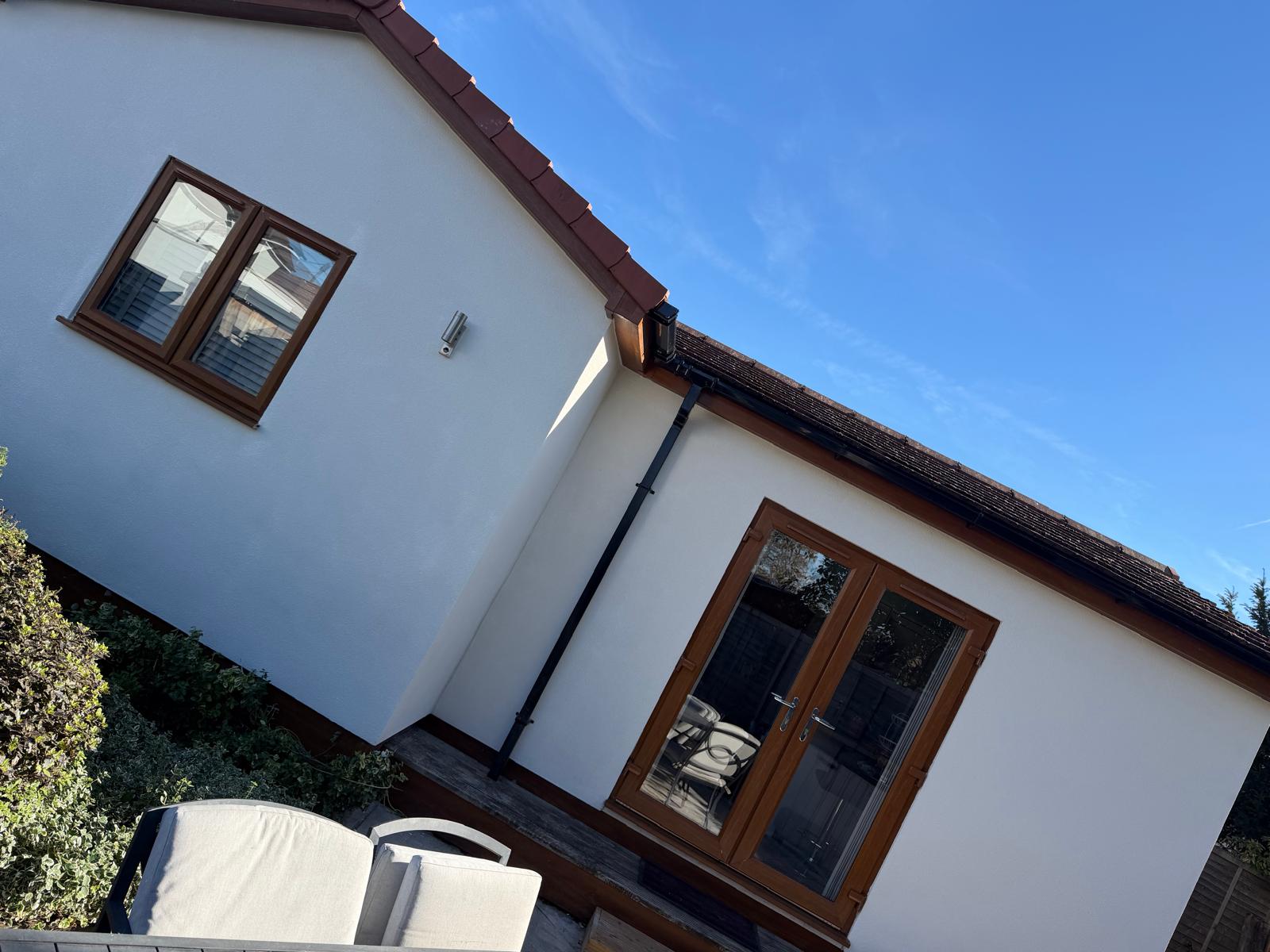
Know exactly what your property needs
Book a free inspection with Robbie. You get a clear written quotation for your silicone rendering before anything is agreed, with no obligation to go ahead.
- Checkatrade member since January 2014
- 1-year workmanship guarantee
- Monday to Saturday, 7am–5pm