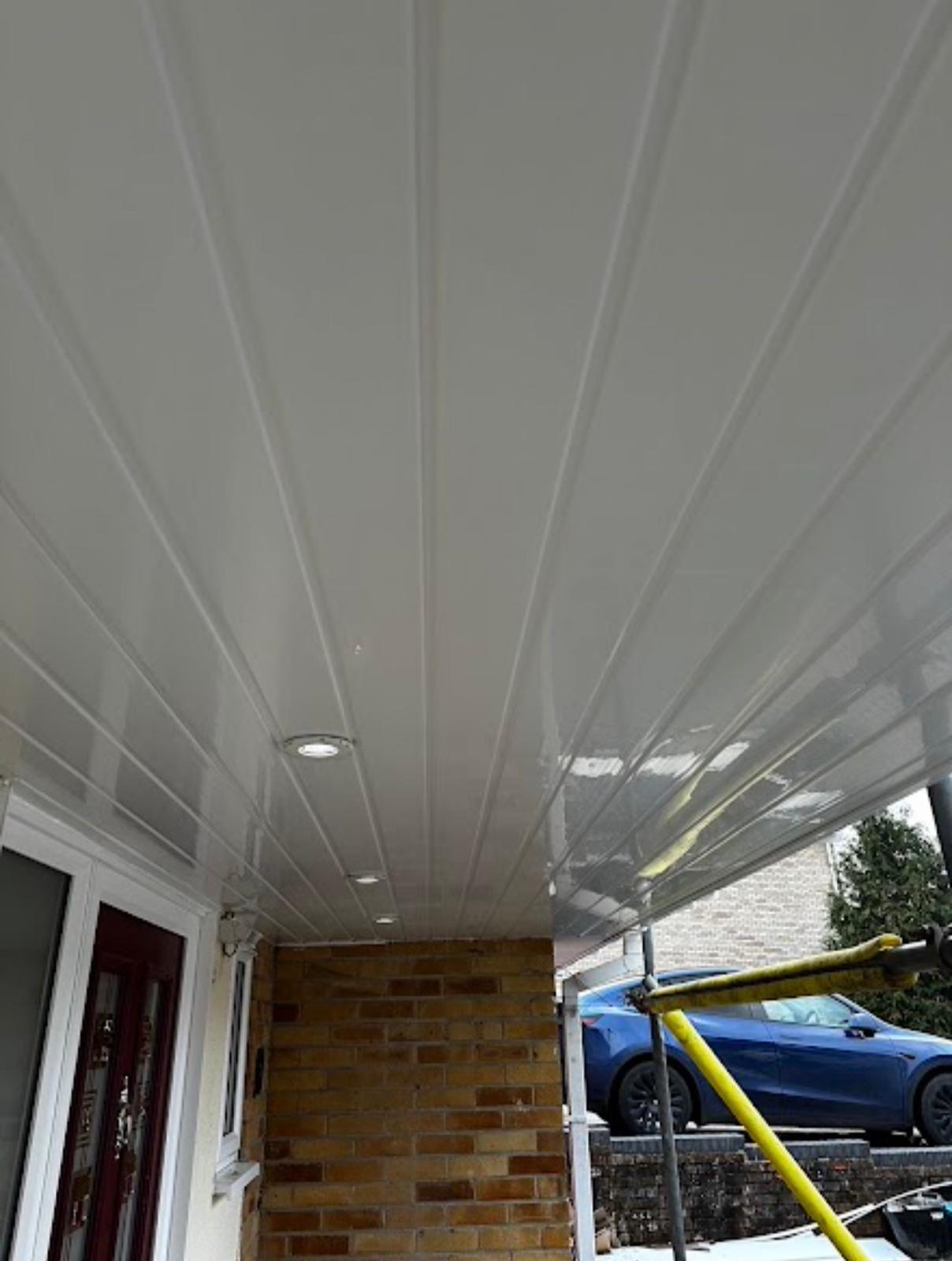
Fascia & Soffit Renewalin FarnboroughA sounder finish around your roofline
Replace deteriorated roofline boards with a planned system that considers ventilation, gutter support and the condition behind the visible finish.
27 years in the trade · 1-year workmanship guarantee · Free quotations
27 years
in the building trade
15 years
running his own business
Checkatrade
member since January 2014
1-year guarantee
on workmanship
Free
inspections & quotations
Service overview
Roofline renewal is more than replacing the visible boards
Fascias close the exposed ends of the roof structure and commonly support the gutters. Soffits form the underside of the eaves, helping enclose the roof edge while accommodating ventilation where the roof design requires it. When these components become rotten, distorted or insecure, repainting may no longer be a practical repair. Renewal is an opportunity to inspect the roofline properly rather than hiding deterioration beneath another layer of board.
Restoreworks Ltd offers free inspections and quotations for fascia and soffit renewal in Farnborough and the surrounding service area. The inspection should consider the existing boards, gutter fixings, accessible roof-edge timber and ventilation arrangements. Problems can extend behind the visible face, so the quotation should explain the proposed replacement method and how any concealed deterioration discovered during removal would be discussed before additional work proceeds.
The right scope depends on what is already installed. Sound timber may present different options from timber that has softened around fixings or remained wet behind capped boards. Existing eaves details, roof covering and gutter positions also influence the work. A neat roofline should not come at the expense of blocked ventilation, unsupported gutters or water being directed behind the new finish.
Restoreworks is run by Robert, known as Robbie, Flanagan. His background includes 27 years in the building trade, including running crews for London-based companies, and 15 years running his own business. The business is based at 13 Melrose Avenue, Farnborough, GU14 9UL. Prices are provided by quotation after inspection, allowing the work to reflect the roofline rather than a standard package assumed to suit every property.
Who it's for
- Homeowners with rotten, peeling or distorted roofline boards.
- Owners replacing old capped fascias with a considered renewal.
- Landlords planning maintenance to exposed eaves and gutters.
- Commercial property managers responsible for pitched-roof edges.
- Householders reviewing gutter support during roofline repairs.
Signs you need it
- Timber has softened, split or lost its ability to hold fixings.
- Soffit panels are loose, sagging or visibly damaged.
- Paint repeatedly fails because underlying timber remains wet.
- Gutters pull away where fascia fixings have deteriorated.
- Existing roofline work appears to obstruct ventilation paths.
Why damaged fascias and soffits deserve a closer look
The visible boards are part of a wider roof-edge arrangement. These symptoms help explain why inspection matters before choosing a replacement finish.
Weak support for guttering
A gutter bracket is only as dependable as the material holding its fixings. Decayed fascia timber may allow brackets to move, altering gutter falls or letting sections sag. Renewing the visible surface without checking the fixing background can leave the drainage problem unresolved beneath a tidier finish.
Deterioration hidden behind capping
Cover boards can conceal damp or rotten timber if the background was not suitable when they were installed. The outer surface may appear sound while fixings lose support behind it. Inspection and an agreed approach to opening up are more useful than assuming an existing capped roofline is structurally sound.
Restricted roof ventilation
Some roofs depend on ventilation at the eaves to help control moisture within the roof space. Replacing soffits without considering that arrangement can obstruct an existing airflow route. The required provision depends on the roof design, so ventilation should be considered as part of the detail rather than an optional decorative strip.
Water reaching the roof edge
Overflowing gutters, defective eaves details or displaced roof coverings can keep new boards wet just as they did the old ones. Renewal needs to consider those interfaces. Replacing a fascia does not, by itself, correct a separate roof leak or ensure that rainwater enters the gutter cleanly.
Common mistakes to avoid
Covering rotten timber
A fresh cover board may improve appearance without restoring a sound fixing base. Where timber has deteriorated, the extent of removal and any necessary repair should be established. Ask whether the proposal is capping or full replacement, and what evidence supports that choice for your roofline.
Choosing colour before construction
Colour and profile matter, but they should follow the practical specification. Board type, fixing support, ventilation and connections to the roof covering are more important to performance. A coordinated finish cannot compensate for movement at joints or a drainage detail that sends water behind the fascia.
Assuming hidden work is included
Not every defect is visible before old boards come off. The quotation should distinguish the agreed renewal from possible concealed repairs and explain how changes will be authorised. This is clearer than treating every unknown as included or allowing additional work to proceed without a discussion.
How it works
Our fascia & soffit renewal process
- 01
1. Inspect the existing roofline
The free inspection looks at visible deterioration, gutter support, ventilation and access. Existing capping, unusual junctions and signs of water entry deserve attention. Where concealed areas cannot yet be assessed, the limits of the initial inspection should be explained rather than treated as certainty.
- 02
2. Agree materials and scope
The quotation should identify the boards, finish and extent of renewal, together with any gutter work included. Discuss full replacement versus capping, ventilation provisions and the treatment of corners or gable junctions. Cost depends on inspection, including access and the condition of the supporting construction.
- 03
3. Establish safe access and remove
Suitable access and protection are arranged for the working areas. Existing gutters or boards are removed as required by the agreed scope, exposing the relevant fixing background. Any concealed deterioration that changes the repair needs should be discussed before proceeding with work beyond the quotation.
- 04
4. Fit the new roofline
Replacement components are fixed to an appropriate sound background, with joints and movement allowances suited to the chosen system. Ventilation routes must be preserved or provided where required by the roof design. Gutter brackets and roof-edge interfaces are considered together rather than as unrelated finishing tasks.
- 05
5. Check the completed details
The handover checks visible alignment, secure components and the agreed ventilation and gutter arrangements. Where guttering has been disturbed, its connections and discharge should be checked appropriately. Any maintenance advice and remaining roof defects outside the scope should be explained alongside the one-year workmanship guarantee.
What you get
The benefits of fascia & soffit renewal done properly
A sound background for fixings
Where deteriorated material is properly addressed, renewal provides a more dependable basis for the roofline components. This is particularly important around gutter brackets, where the weight of water and accumulated debris can expose weaknesses in old timber.
Less recurring surface preparation
Suitable replacement materials can reduce the cycle of scraping and repainting associated with ageing timber. They are not maintenance-free: periodic cleaning, checks of joints and attention to gutters remain sensible parts of looking after the roof edge.
Ventilation considered from the start
Planning ventilation alongside the new boards avoids treating airflow as an afterthought. The objective is to maintain an appropriate roof arrangement, recognising that condensation can also have causes elsewhere within the building and roof space.
A consistent roofline appearance
Renewal can bring uneven, patched or heavily weathered boards into a more coherent finish. Colours, profiles and corners can be considered together while keeping attention on the practical junctions that determine how the roofline performs.
Better coordination with gutter work
Removing or renewing boards may create a sensible opportunity to assess gutter condition and bracket positions. Coordinating the two can avoid reinstalling failing drainage components, although the quotation should clearly state whether gutter renewal or repairs are included.
A clearer maintenance picture
Inspecting the exposed roof edge can identify issues that a surface repaint would leave hidden. Understanding what has been replaced, what remains sound and what needs separate attention makes future maintenance more informed and less dependent on guesswork.
In detail
Materials, replacement methods and roofline details
Timber, cellular PVC and suitable board selection
Timber and cellular PVC roofline products have different maintenance and installation requirements. Timber needs appropriate protection and ongoing coating maintenance. Cellular PVC avoids routine repainting but still needs correct fixing, movement allowance and cleaning. Selection should reflect the building, desired finish and supporting detail rather than a claim that one material suits every roof.
Full replacement fascia boards and thin cover boards perform different roles. A cover board generally relies on a suitable existing background; it should not be treated as a structural remedy for decay. The quotation should identify the intended construction so that the appearance of a product is not confused with what it can support.
Full replacement compared with over-capping
Full replacement removes the existing fascia to address the roofline from its supporting background. It can make concealed deterioration easier to identify, although access to every part of the roof structure may still be limited. Any additional timber or roof repairs need a clear scope rather than being assumed within a board replacement.
Over-capping may be considered only where the retained material is suitable and the detail remains workable. It must not conceal known decay or interfere with gutter alignment and roof ventilation. The decision should follow inspection, with the limitations explained, rather than being selected solely because it involves less removal.
Ventilation, eaves and awkward junctions
A ventilated soffit is only effective if the airflow route behind it remains open and suits the roof construction. Insulation, existing closures and other details can affect that route. Simply adding a vented panel does not prove that the whole roof has adequate ventilation or that existing condensation will disappear.
Corners, changes in roof level, bay roofs and junctions with bargeboards need planning so that boards remain secure and water is directed appropriately. Existing roof underlay or eaves details may need separate attention. Where suspect older materials are encountered, they should not be casually disturbed; appropriate assessment may be needed first.
Homes, rented buildings and commercial premises
Residential work often needs coordination around driveways, conservatories, extensions and garden access. These features affect how the eaves can be reached and protected. Discuss what must be moved and whether access equipment will restrict parking or entrances, rather than assuming the work can be completed from an ordinary ladder.
Commercial and rented properties may have several occupants, shared entrances or delivery routes beneath the roofline. A workable sequence should consider those uses and the need to separate people from overhead work. Agreed access arrangements are part of planning; they do not amount to a promise of uninterrupted use throughout the job.
Related services
Fascia & Soffit Renewal near you
- Fascia & Soffit Renewal Farnborough
- Fascia & Soffit Renewal Aldershot
- Fascia & Soffit Renewal Fleet
- Fascia & Soffit Renewal Farnham
- Fascia & Soffit Renewal Camberley
- Fascia & Soffit Renewal Frimley
- Fascia & Soffit Renewal Yateley
- Fascia & Soffit Renewal Sandhurst
- Fascia & Soffit Renewal Woking
- Fascia & Soffit Renewal Alton
- Fascia & Soffit Renewal Basingstoke
- Fascia & Soffit Renewal Egham
- Fascia & Soffit Renewal Guildford
- Fascia & Soffit Renewal Hook
- Fascia & Soffit Renewal Reading
- Fascia & Soffit Renewal Twickenham
Back to the Restoreworks homepage, see all exterior services, or contact Robbie for a free quotation.
FAQs
Fascia & Soffit Renewal questions, answered
How much does fascia and soffit renewal cost?
+
Cost depends on inspection. Roofline length, access, material choice, removal requirements and the condition of the supporting timber all affect the quotation. Restoreworks offers free inspections and quotations, with prices on quotation only. The scope should also clarify whether gutter work and any associated roof-edge repairs are included.
How long will the replacement take?
+
Timing depends on the amount of roofline, access arrangements and what is found when existing boards are removed. Simple straight eaves differ from several roof levels with awkward junctions. Weather can also affect safe working. A likely programme can be discussed after inspection, without promising a fixed duration before the details are known.
Do you remove the old fascias and soffits?
+
The method depends on the agreed specification and the condition of the existing construction. Full replacement and capping are different approaches, and rotten timber should not simply be hidden. The quotation should explain what is being removed, what is retained and how any concealed deterioration discovered during the work will be addressed.
What guarantee does Restoreworks provide?
+
Restoreworks provides a one-year workmanship guarantee. Ask for the terms and how they apply to the quoted renewal work. This should not be confused with a product-manufacturer warranty or a guarantee that unrelated roof defects, existing condensation or other problems outside the agreed scope have been resolved.
How long do replacement fascias and soffits last?
+
Correctly installed roofline materials can last for decades, but service life depends on the material, exposure, supporting construction and maintenance. Persistent leaks or poor fixing details can shorten it substantially. Keep gutters clear and inspect joints and boards periodically rather than assuming any replacement system will never need attention.
Can you attend an emergency loose soffit?
+
Restoreworks does not offer an emergency or 24-hour service. Call during opening hours, Monday to Saturday, 7am to 5pm; Sunday is closed. Keep people away from any area beneath loose material and seek appropriate urgent assistance if it presents an immediate danger. Do not climb up to secure it yourself.
Do you inspect fascias and soffits in Farnborough?
+
Yes. Restoreworks is based at 13 Melrose Avenue, Farnborough, GU14 9UL, and offers free inspections and quotations. Enquiries are also welcome from nearby areas including Aldershot, Fleet, Camberley and Frimley. Inspection helps establish the visible condition, practical access and the roofline details needed for a meaningful quotation.
Should I replace the guttering at the same time?
+
Not necessarily. Sound guttering may be suitable for reuse if its condition, capacity and fixings remain appropriate. Brittle, leaking or poorly aligned sections may justify renewal while the roofline is accessible. Ask for the quotation to distinguish retained components, repairs and replacements so that the drainage work is not left ambiguous.
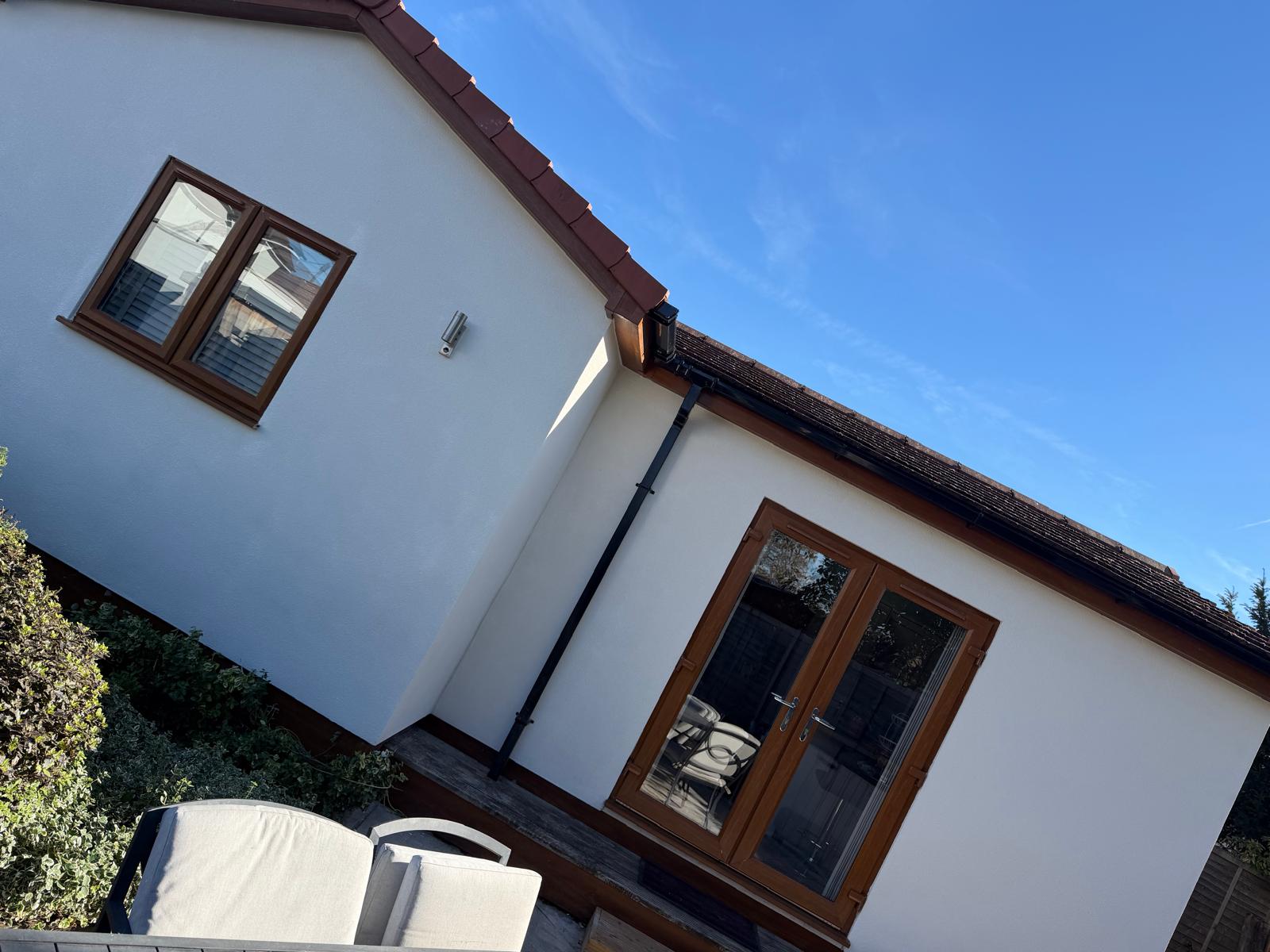
Know exactly what your property needs
Book a free inspection with Robbie. You get a clear written quotation for your fascia & soffit renewal before anything is agreed, with no obligation to go ahead.
- Checkatrade member since January 2014
- 1-year workmanship guarantee
- Monday to Saturday, 7am–5pm