Roofing & Roof Repairsin FarnboroughUnderstand the roof before choosing the work
From isolated roof defects to re-roofing, assess the covering, junctions and surrounding details before deciding how much work is needed.
27 years in the trade · 1-year workmanship guarantee · Free quotations
27 years
in the building trade
15 years
running his own business
Checkatrade
member since January 2014
1-year guarantee
on workmanship
Free
inspections & quotations
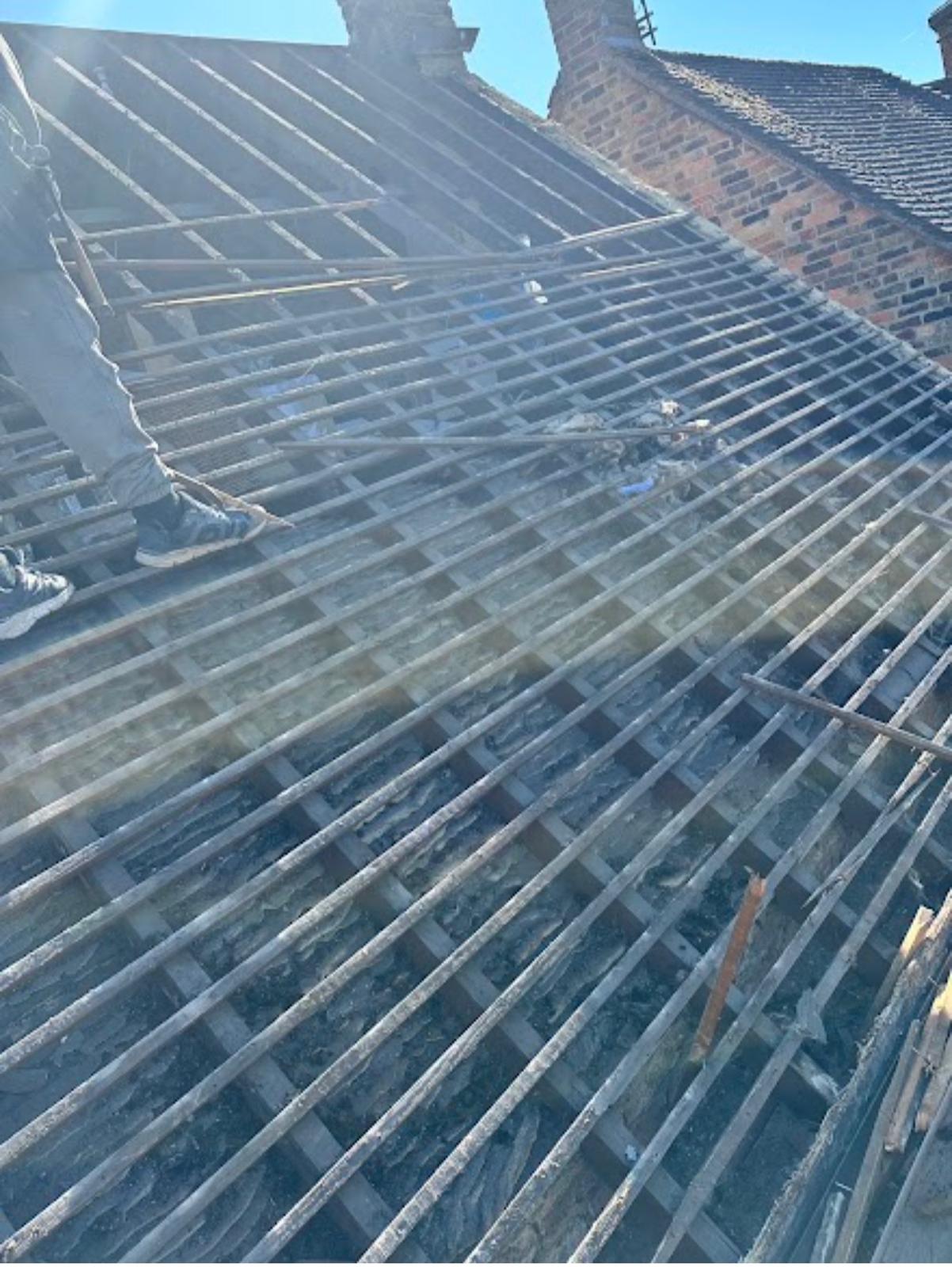
Service overview
Roof repairs and renewal based on the cause
A roof leak is a symptom, not a diagnosis. Water can travel along underlay, timbers or junctions before appearing inside, so the damp patch below may not sit directly beneath the entry point. A useful inspection considers the covering and the details around it, including roof edges, valleys, chimneys and flashing. The aim is to distinguish a local failure from broader deterioration.
Restoreworks Ltd offers roofing and roof repairs in Farnborough, covering roof repairs, re-roofing, felt and GRP flat roof systems, chimney repairs and lead work. Free inspections and quotations provide a starting point for discussing what the roof needs. The appropriate solution depends on the existing construction, access and condition rather than a preference for one repair material.
The company is run by Robert, known as Robbie, Flanagan, with 27 years in the building trade, including running crews for London-based companies, and 15 years running his own business. Restoreworks has been a Checkatrade member since January 2014 and is based at 13 Melrose Avenue, Farnborough, GU14 9UL.
Costs depend on inspection, and prices are supplied by quotation only. Restoreworks provides a one-year workmanship guarantee and accepts payment by bank transfer. Opening hours are Monday to Saturday, 7am to 5pm, with Sunday closed. There is no emergency or 24-hour service, so do not assume immediate attendance for an active leak or storm damage.
Who it's for
- Homeowners investigating leaks, slipped coverings or deteriorating roof details.
- Property owners comparing further repairs with a more extensive re-roofing proposal.
- Households considering felt or GRP for a suitable flat roof.
- Landlords and commercial property contacts planning roof, chimney or lead work.
Signs you need it
- Water marks recur after rainfall or appear near a roof junction.
- Tiles, slates or other visible roof components have moved or broken.
- A flat roof shows splits, failed edges or recurring areas of leakage.
- Chimney masonry or lead details show visible deterioration from a safe viewpoint.
What a roof inspection needs to separate
Similar symptoms can have different causes. The right scope depends on understanding the covering, its supporting condition and the places where water is meant to be directed away from vulnerable junctions.
Water entering through more than one route
A visible broken tile may be relevant without being the only defect. Water can enter around a chimney, at an abutment or through a damaged junction elsewhere. Treating the first obvious fault as a complete diagnosis can leave another entry point active, especially on roofs with several alterations.
Deterioration beneath the covering
A roof covering can conceal defects in the materials below. Persistent leakage may affect decking or timber, while some conditions only become apparent when work exposes them. An initial inspection has limits, so the potential for concealed findings should be discussed without assuming that all underlying structure needs replacement.
Movement at junctions and edges
Roof materials expand, contract and respond differently to weather. Flashings, edges and changes in direction need details that accommodate those conditions. A rigid patch over a moving junction may split again, making repeated surface treatment less useful than understanding how the connection should work.
Repairs becoming a repeated cycle
A sound roof with an isolated defect can justify local work. Widespread deterioration presents a different decision, particularly where several previous repairs are failing. Re-roofing should not be assumed necessary because of age alone, but repeated patching should not continue without considering the remaining condition.
Common mistakes to avoid
Tracing a leak only from the indoor stain
Water can move before it becomes visible, so the stain's position is only one clue. Note when it appears, the weather conditions and any previous repairs. Avoid climbing into unsafe spaces or onto the roof to trace it; a safe inspection is more useful than an unsupported assumption.
Using coating as a universal repair
A coating or sealant cannot make every substrate sound or correct a poorly formed junction. Some products are incompatible with existing materials, and a patch may obscure the original defect. The method should follow the roof construction, condition and movement rather than the convenience of applying another layer.
Comparing quotations without checking scope
A covering-only repair is not equivalent to work including defective decking, insulation changes or altered junctions. Read what is included, retained and excluded. For re-roofing, also clarify how relevant building requirements and any discovered defects will be addressed instead of comparing descriptions that cover different work.
How it works
Our roofing & roof repairs process
- 01
Discuss symptoms and roof type
Describe the leak, visible damage, previous work and whether the roof is pitched or flat. Mention access restrictions, extensions below and any known chimney concerns. Photographs taken safely from ground level can help explain the issue, but no diagnosis should rely on a photograph alone.
- 02
Inspect accessible roof details
The free inspection considers the relevant covering, edges and junctions where safely accessible. Its findings help identify likely causes and practical options. Concealed layers cannot always be assessed without opening up, and any such limitations matter when deciding how certain the initial scope can be.
- 03
Agree repair or renewal
Discuss whether local repairs, a larger section of renewal or re-roofing offers the sensible approach. The quotation should identify the proposed materials, access requirements and relevant interfaces. Where felt, GRP, chimney or lead work is involved, the specific system and details need to suit the existing construction.
- 04
Carry out the agreed roofing work
The method follows the agreed scope and appropriate weather conditions. Roof coverings, junctions and supporting surfaces need compatible preparation and detailing. If opening the roof reveals an unforeseen defect, its implications should be discussed rather than assuming that a surface repair remains suitable or that additional work is automatically included.
- 05
Review details and future checks
The completed work should be considered alongside adjoining retained areas, with any remaining concerns explained. Discuss maintenance such as keeping drainage routes clear and observing the roof from ground level after severe weather. A repair does not remove the need to monitor other ageing parts of the roof.
What you get
The benefits of roofing & roof repairs done properly
A reasoned repair-or-renew choice
Understanding the extent of deterioration helps separate a worthwhile repair from work that may only postpone broader renewal. The decision should consider the condition of neighbouring materials and junctions, not simply whether the latest leak can be covered over.
Attention to water routes
A roof works through connected falls, overlaps, flashings and outlets. Looking at those relationships helps avoid moving water from one vulnerable point to another. Correcting the identified route of entry is more useful than treating only the place where damp becomes visible indoors.
Materials matched to the construction
Felt, GRP, pitched coverings and lead details perform different roles and need suitable supporting conditions. An inspection-led specification avoids treating them as interchangeable products. The important question is how the selected material will function within the particular roof arrangement.
Defined junction and chimney work
Chimneys and abutments involve several possible defects, from masonry joints to lead connections. Clarifying the relevant work avoids using a broad phrase such as chimney repair to describe an unspecified intervention. The quotation can then focus on the actual details identified.
Better planning for concealed findings
Knowing what an inspection can and cannot establish helps set realistic expectations. Where a covering conceals decking or timber, discussing that limitation in advance makes later decisions clearer if exposure reveals a condition that changes the appropriate scope.
Useful maintenance priorities
An explanation of the repaired area and adjoining retained roof gives you something practical to monitor. Safe observations after rain, clear drainage routes and attention to new staining can help identify changes without encouraging unnecessary or unsafe access to the roof.
In detail
Pitched roofing, flat roof systems and specialist junctions
Local pitched-roof repairs and re-roofing
Pitched-roof work can range from replacing damaged coverings to addressing ridges, verges, valleys or abutments. The correct repair depends on how that part of the roof sheds water and how it connects to the surrounding construction. A replacement covering should be compatible with the existing arrangement, not merely similar in colour.
Re-roofing is a broader decision involving the retained structure, underlying layers, ventilation and relevant thermal requirements. Existing coverings may sometimes conceal defects that only become clear during removal. The quotation should define the planned work and explain how changes prompted by exposed conditions would be considered, rather than promising a fixed outcome before the roof is opened.
Felt flat roof systems and supporting conditions
Bituminous felt systems rely on appropriate layers, secure detailing and a substrate suited to the chosen installation method. Edges, outlets and upstands are as important as the main surface. Splits or blisters need assessment in context; placing a patch over unsound or wet material may fail to address the reason the defect developed.
A flat roof still needs an effective route for water to reach its drainage point. Persistent ponding raises questions about falls, deflection or blocked outlets, although its significance depends on the system and circumstances. Discuss the deck, insulation and drainage arrangement when considering renewal, rather than treating the visible membrane as the whole roof.
GRP flat roofs and installation conditions
GRP, or glass-reinforced plastic, forms a roof covering using resin and reinforcement over a suitable deck. The selected system's preparation, weather conditions and detailing requirements matter. It should not be assumed that an existing deteriorated covering can simply receive GRP without considering the substrate and the complete roof build-up.
Corners, trims, outlets and connections to walls require careful detailing, while movement needs consideration on larger or more complex roofs. GRP is not automatically the best choice for every property. Compare its suitability with other options based on roof shape, supporting construction, drainage and practical installation conditions identified at inspection.
Chimney repairs and lead work
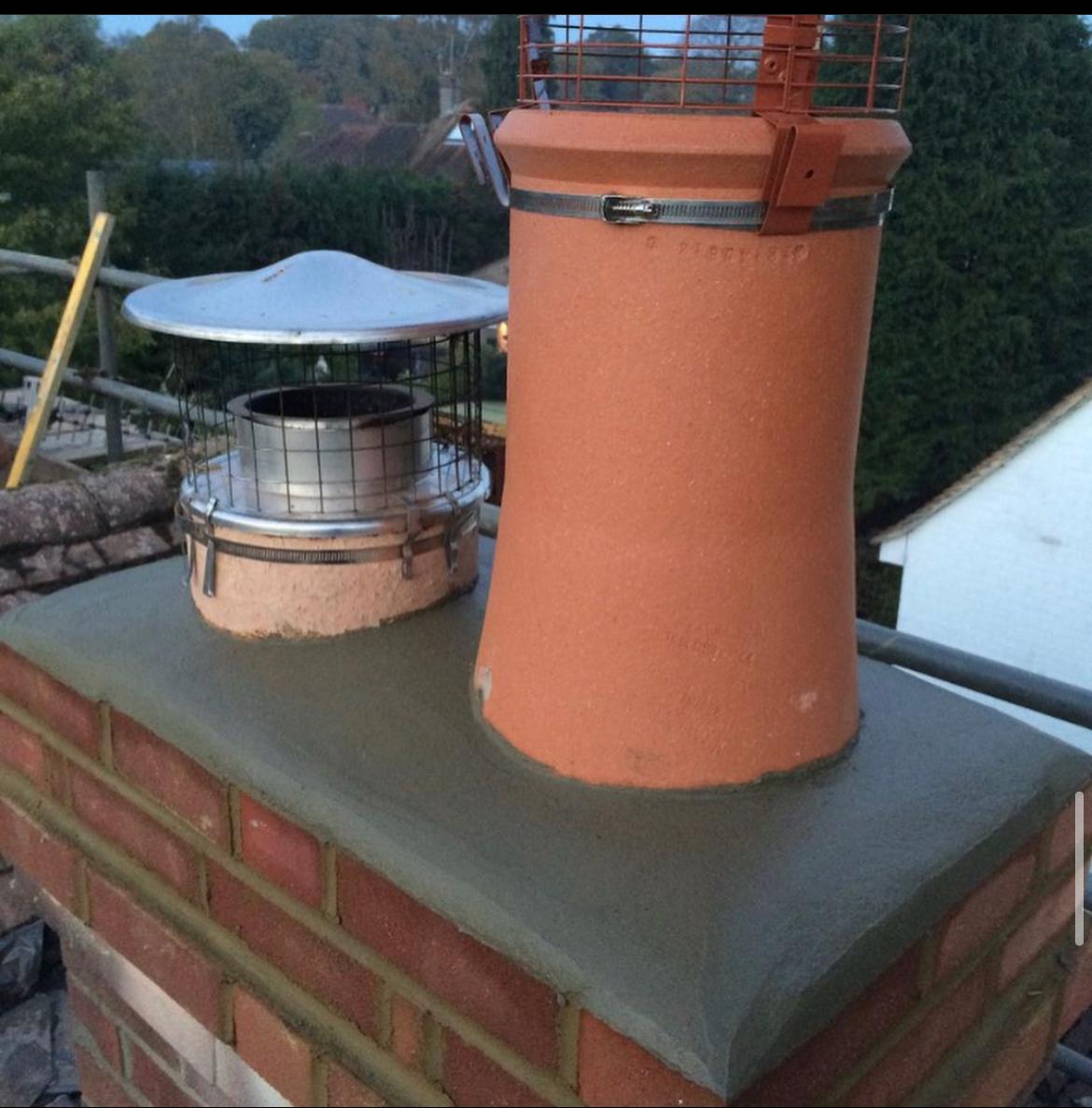
A leaking chimney area may involve masonry joints, flaunching, flashing or the connection between the stack and roof. These elements should be assessed separately rather than assuming that all chimney leaks need the same treatment. Work affecting a chimney's function or condition may also require further specialist assessment beyond a visible roof-level defect.
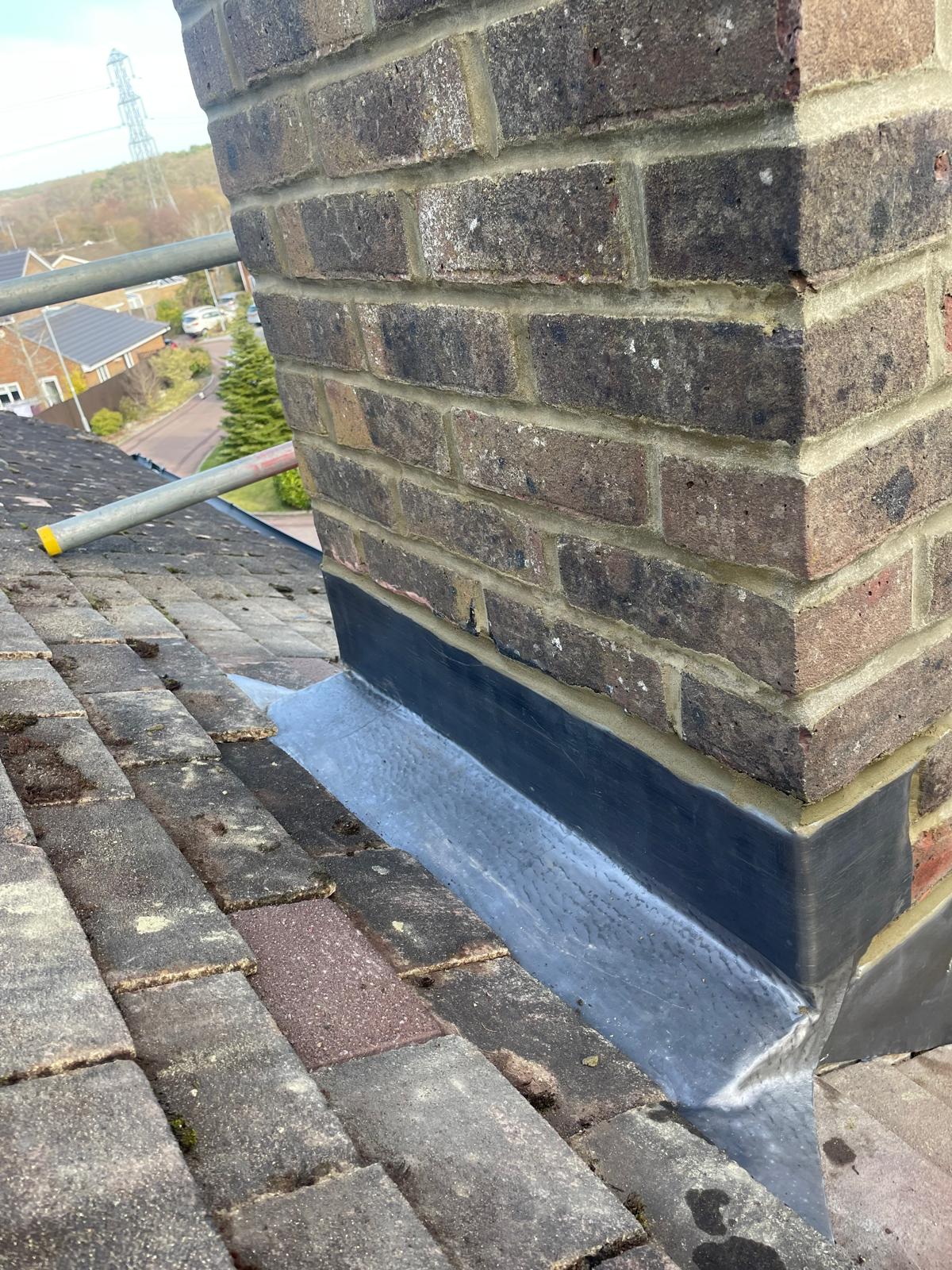
Lead work depends on appropriate thickness, sizing, laps, support and allowance for movement. Oversized or restrained pieces can split, while poorly formed junctions can direct water behind the covering. Repairs should consider why the existing detail failed, and whether a local intervention can function alongside the retained material.
Homes, commercial premises and occupied buildings
Residential roofing decisions often involve protecting occupied rooms, working around extensions and understanding where leaks appear. Discuss access, sensitive areas and the roof's history before agreeing the scope. An external repair will not automatically remedy existing internal damage, and condensation should not be confused with rainwater entry without suitable investigation.
Commercial premises may have larger roof areas, different access arrangements and operational restrictions around entrances or working areas. Explain those constraints during inspection. A system suitable for a small domestic extension is not automatically appropriate for a larger roof, and the specification must reflect the actual construction and use.
Related services
Roofing & Roof Repairs near you
- Roofing & Roof Repairs Farnborough
- Roofing & Roof Repairs Aldershot
- Roofing & Roof Repairs Fleet
- Roofing & Roof Repairs Farnham
- Roofing & Roof Repairs Camberley
- Roofing & Roof Repairs Frimley
- Roofing & Roof Repairs Yateley
- Roofing & Roof Repairs Sandhurst
- Roofing & Roof Repairs Woking
- Roofing & Roof Repairs Alton
- Roofing & Roof Repairs Basingstoke
- Roofing & Roof Repairs Egham
- Roofing & Roof Repairs Guildford
- Roofing & Roof Repairs Hook
- Roofing & Roof Repairs Reading
- Roofing & Roof Repairs Twickenham
Back to the Restoreworks homepage, see all exterior services, or contact Robbie for a free quotation.
FAQs
Roofing & Roof Repairs questions, answered
How much do roof repairs or re-roofing cost?
+
Cost depends on inspection. The roof type, defect, access, materials and extent of any underlying deterioration all affect the scope. Restoreworks provides free inspections and quotations, with prices by quotation only. A repair, partial renewal and full re-roofing are different proposals and should not be compared as identical work.
How long will the roofing work take?
+
Timing depends on the agreed work, access, materials and suitable weather. A local repair differs substantially from re-roofing or renewing a flat roof system. Concealed defects may also change the programme once exposed. Discuss the likely sequence after inspection rather than assuming a standard completion time.
What happens during a roofing inspection and quotation?
+
The process starts with your description of the problem and a free inspection of relevant areas where safely accessible. Findings inform a proposed repair or renewal scope and quotation. Any limits on visibility, access or certainty should be considered, particularly where concealed decking or other layers may influence the final work.
What guarantee does Restoreworks provide?
+
Restoreworks provides a one-year workmanship guarantee. Ask how it applies to the roofing work described in your quotation, especially where adjoining coverings or underlying components are retained. Do not assume that the guarantee means the entire existing roof has been renewed or that separate product warranties are included.
How long do repaired roofs, felt and GRP systems last?
+
Lifespan varies with the complete system, installation, exposure, drainage and maintenance. Properly specified flat roof systems can remain serviceable for many years, but no universal figure suits every roof. A local repair also depends on the retained materials, so its likely usefulness should be discussed in that context.
Do you offer emergency roof repairs or 24-hour call-outs?
+
No. Restoreworks does not provide an emergency or 24-hour service. Call during opening hours, Monday to Saturday, 7am to 5pm; Sunday is closed. Availability must be discussed. Keep clear of falling materials or unsafe areas, and do not climb onto a wet or damaged roof.
Can I arrange roof repairs in Farnborough?
+
Yes. Restoreworks Ltd is based at 13 Melrose Avenue, Farnborough, GU14 9UL, and offers free inspections and quotations. Areas also include Aldershot, Fleet, Farnham, Camberley, Woking, Guildford, Hook and Reading. Describe the roof type, symptoms and access when arranging an inspection.
Can you repair chimneys and lead flashing as well as the roof covering?
+
The roofing scope covers chimney repairs and lead work as well as roof repairs, re-roofing, felt and GRP flat roof systems. What is appropriate depends on inspection. A chimney-area leak may involve several different details, so the quotation should identify the actual work rather than assume a single universal fix.
Know exactly what your property needs
Book a free inspection with Robbie. You get a clear written quotation for your roofing & roof repairs before anything is agreed, with no obligation to go ahead.
- Checkatrade member since January 2014
- 1-year workmanship guarantee
- Monday to Saturday, 7am–5pm