
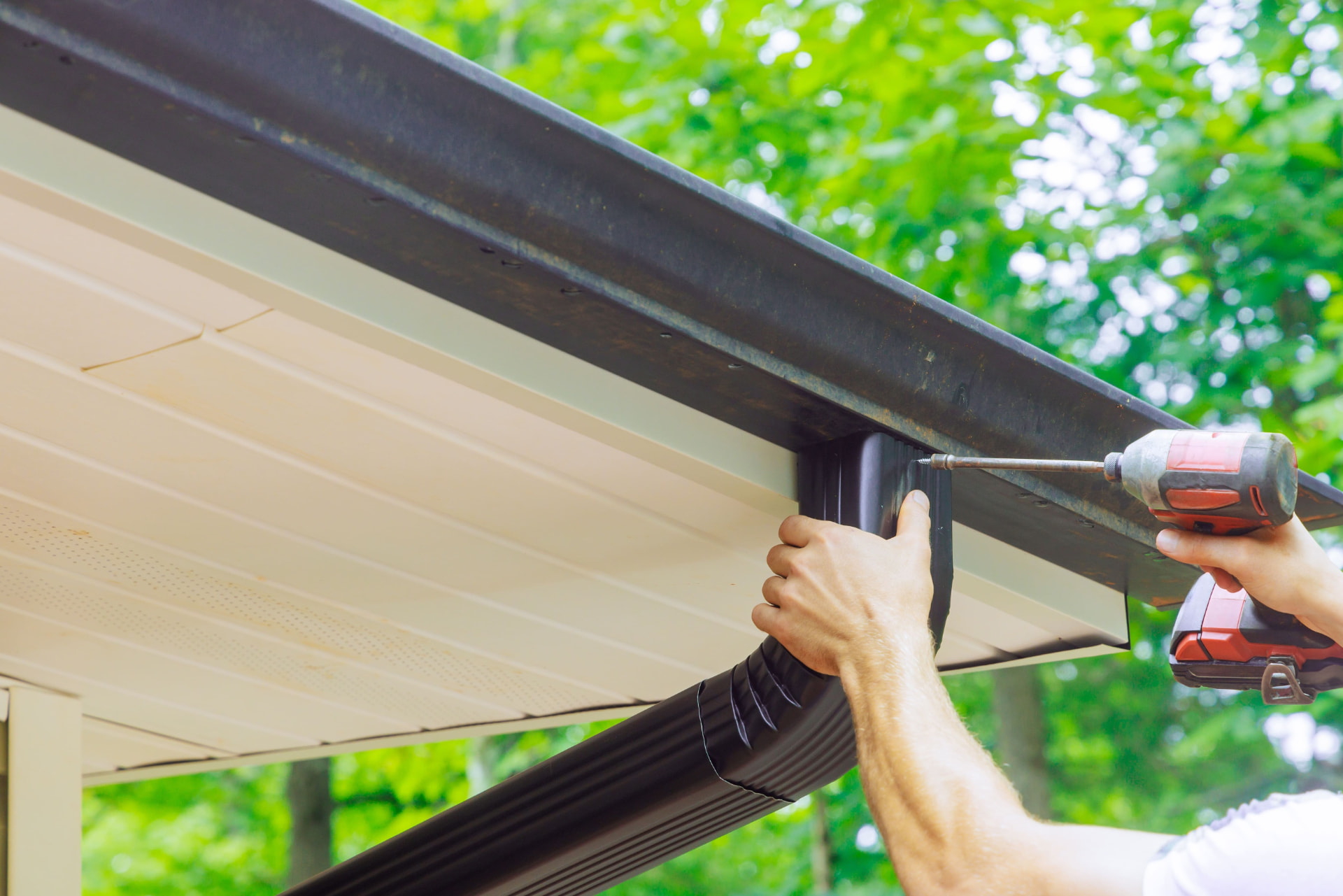
Guttering Renewalin FarnboroughDirect rainwater away from vulnerable walls
Replace failing gutters with a layout that considers the roof area, supports, outlets and existing drainage connections.
27 years in the trade · 1-year workmanship guarantee · Free quotations
27 years
in the building trade
15 years
running his own business
Checkatrade
member since January 2014
1-year guarantee
on workmanship
Free
inspections & quotations
Service overview
Renew guttering around how the roof actually drains
Guttering collects water from the roof and carries it towards the downpipes and an appropriate existing drainage connection. When runs sag, joints repeatedly leak or outlets cannot cope, water can spill over onto walls and roofline timber. Renewal replaces deteriorated components, but a useful specification also considers why the old system struggled. Repeating the same poor falls or undersized arrangement can leave the original problem in place despite new materials.
Restoreworks Ltd offers free inspections and quotations for guttering renewal in Farnborough and the surrounding service area. The inspection should review the visible gutter condition, bracket support, outlet positions and downpipe routes. It should also distinguish a worn-out system from one that mainly needs clearing or a local repair. Replacement is not automatically necessary because a single joint leaks or leaves have collected in an outlet.
Gutters need to work with the roof edge and the building below. Water should enter them cleanly rather than overshooting or tracking behind the fascia. Downpipes should discharge into an appropriate existing arrangement, not simply empty beside a wall because it is convenient. Restoreworks does not undertake groundworks, so any need for new underground drainage must be treated separately rather than implied within a gutter renewal quotation.
Restoreworks is run by Robert, known as Robbie, Flanagan, who has 27 years in the building trade, including running crews for London-based companies, and 15 years running his own business. Based at 13 Melrose Avenue, Farnborough, GU14 9UL, the business provides prices by quotation following inspection. That allows the proposed work to account for access, roof shape and the actual condition of the existing rainwater goods.
Who it's for
- Homeowners with brittle, distorted or repeatedly leaking gutters.
- Owners addressing overflow after clearing has not resolved it.
- Landlords planning replacement of ageing rainwater goods.
- Commercial property managers reviewing roof drainage.
- Householders coordinating gutter renewal with fascia work.
Signs you need it
- Several joints leak despite previous local repairs.
- Gutter runs sag or pull away from their supports.
- Components are cracked, distorted or difficult to reconnect.
- Water repeatedly overshoots or spills from cleared gutters.
- Downpipes or outlets no longer suit the roof arrangement.
What ineffective guttering can leave behind
Overflow is a symptom, not a complete diagnosis. These consequences explain why the drainage route and the condition of the supporting roofline deserve attention together.
Repeated wetting of external walls
Leaking joints and overflowing runs can concentrate water onto the same area of masonry. Staining may be the first visible sign, followed by deterioration where materials remain wet. Renewing faulty guttering can remove that source, but existing internal damp still needs its cause checked rather than assumed.
Decay around the fascia
Water passing behind a gutter can keep roofline timber wet and weaken the material holding the brackets. Fitting a new gutter onto a decayed fascia leaves an unreliable support beneath it. The condition of the fixing background should be considered before new components are installed.
Overflow despite recent cleaning
A clear gutter can still overflow if its capacity, fall or outlet arrangement is unsuitable. Roof valleys may concentrate flow into a small section, while changes to the building can alter the catchment. The inspection should look at the system rather than repeatedly treating every overflow as a blockage.
Water collecting near paths and walls
Disconnected or poorly routed downpipes can release water where it causes nuisance and persistent wetting. The intended discharge point needs checking during planning. An above-ground gutter renewal cannot guarantee the condition or capacity of hidden drains, and any underground problem may need separate investigation.
Common mistakes to avoid
Replacing the profile without reviewing capacity
Copying the old gutter size is not always the right specification, particularly where roofs have been extended or flow is concentrated at a valley. Roof area, geometry and outlet positions all matter. A larger-looking profile alone is not proof that the complete drainage arrangement will work.
Mixing incompatible components
Similar-looking gutters, seals and fittings are not necessarily interchangeable. Mismatched parts can leave joints poorly engaged or unable to accommodate movement. A coherent system with compatible connections is preferable to forcing new pieces into old fittings simply because their colour and shape appear close.
Ignoring what happens below the downpipe
New gutters still need somewhere appropriate to discharge. A blocked gully or defective underground drain can cause problems even when every above-ground joint is sound. Clarify the existing connection and the limits of the work; Restoreworks does not provide groundworks as part of guttering renewal.
How it works
Our guttering renewal process
- 01
1. Inspect the rainwater route
The free inspection follows the visible route from roof edge to gutter, outlet and downpipe. It considers leaks, falls, support and the existing discharge arrangement. Access restrictions and signs of separate roof or drainage defects should be discussed before deciding whether renewal is the right response.
- 02
2. Specify the replacement
The quotation should describe the proposed gutter profile, affected runs, outlets and downpipes, along with any fascia work included. Material and colour can then be agreed around the practical requirements. Cost depends on inspection, including access and the extent of replacement rather than a price assumed from frontage alone.
- 03
3. Remove the failing components
Suitable access and protection are arranged before the agreed gutters and fittings are removed. The supporting fascia and fixing positions can then be checked more closely. Any newly exposed deterioration that changes the required work should be discussed rather than hidden behind the replacement brackets.
- 04
4. Install the system
Brackets, outlets and gutters are positioned to suit the selected system and intended drainage route. Joint engagement and movement allowances matter, especially on long exposed runs. Downpipe connections should be secure and directed towards the agreed existing discharge point without assuming new below-ground work is included.
- 05
5. Check flow and explain upkeep
The completed installation should be checked appropriately for alignment, connections and discharge. A controlled water check can help identify visible leaks, although it cannot reproduce every storm condition. Handover should cover cleaning access, maintenance and any limitations of the existing drainage arrangement outside the quoted work.
What you get
The benefits of guttering renewal done properly
More controlled rainwater collection
A suitable replacement layout helps direct roof water into gutters and towards outlets rather than onto the wall below. Performance depends on the whole arrangement, including the roof edge and discharge route, not simply the condition of a new gutter channel.
Fewer recurring joint problems
Replacing deteriorated or mismatched components can address the reasons joints repeatedly separate or leak. Correct engagement and movement allowance remain important, and routine cleaning is still needed to prevent debris from placing unnecessary strain on the system.
Roofline defects identified earlier
Checking the fascia before installation can reveal a weak fixing background that would otherwise undermine new guttering. Where repairs are needed, they can be discussed explicitly rather than leaving a concealed problem to affect the replacement later.
A layout suited to the roof
Considering roof shape, concentrated flow and outlet positions gives the renewal a practical basis. This is more useful than choosing solely by colour or copying an existing arrangement that may already be responsible for recurrent overflow.
A tidier external finish
Coordinated gutters, downpipes and fittings can improve a roofline previously marked by sagging runs and mixed repairs. Appearance remains secondary to sound support and drainage, but both can be considered within the same clearly defined specification.
Clearer responsibility for maintenance
A handover that identifies outlets, discharge points and any retained components makes the system easier to look after. It also separates the renewed above-ground rainwater goods from existing drains or roof defects that may need attention from another scope.
In detail
Gutter materials, layouts and property-specific decisions
Materials, profiles and compatible fittings
Plastic rainwater systems are common on homes, while metal systems may suit particular buildings or architectural requirements. Half-round, square and deeper profiles differ in appearance and carrying capacity. The appropriate choice depends on the roof and complete system design, not a general claim that one shape always performs best.
Material choice also affects support, jointing and movement. Plastic components expand and contract with temperature, while metal systems have their own fixing and connection requirements. Fittings should be compatible with the selected system. Where existing rainwater goods are retained, the method of connecting old and new sections needs deliberate consideration.
Falls, outlets and concentrated roof water
Bracket positions should support the gutter and establish the intended drainage arrangement in accordance with the chosen system. Poor alignment can leave standing water or local low points. Outlet quantity and position matter as well: increasing the gutter profile without considering where water leaves it may not solve the original limitation.
Valleys, dormers and changes in roof shape can send a large flow into a short section of gutter. These locations need particular attention to collection and capacity. No domestic gutter should be described as incapable of overflowing under any conditions, especially where exceptional rainfall or a blocked outlet changes how the system behaves.
Downpipes and existing drainage connections
Downpipes need secure support, sensible routing and suitable connections at changes of direction. The route may have to work around windows, extensions or other existing features. Discharge should follow the agreed arrangement for the property rather than being diverted to an arbitrary location that creates new wetting or access problems.
An existing gully or underground connection may have limitations that are not visible from above. Gutter renewal does not establish the condition of hidden drainage. Restoreworks does not carry out groundworks, so a requirement for a new below-ground route, excavation or repair must be considered separately from the above-ground rainwater installation.
Residential and commercial renewal situations
At residential properties, conservatories, porches and extensions can complicate access to the roof edge. Mature trees may also affect how frequently gutters need clearing after replacement. Discuss access, nearby belongings and the maintenance implications of the chosen layout, rather than assuming renewal removes the need for periodic inspection.
Commercial buildings may have larger roof catchments, shared drainage or entrances directly beneath the working area. Capacity and safe access need a property-specific assessment, and complex drainage may require specialist design. Occupied premises also need agreed arrangements around deliveries and pedestrian routes without assuming the building can remain completely unaffected during work.
Related services
Guttering Renewal near you
- Guttering Renewal Farnborough
- Guttering Renewal Aldershot
- Guttering Renewal Fleet
- Guttering Renewal Farnham
- Guttering Renewal Camberley
- Guttering Renewal Frimley
- Guttering Renewal Yateley
- Guttering Renewal Sandhurst
- Guttering Renewal Woking
- Guttering Renewal Alton
- Guttering Renewal Basingstoke
- Guttering Renewal Egham
- Guttering Renewal Guildford
- Guttering Renewal Hook
- Guttering Renewal Reading
- Guttering Renewal Twickenham
Back to the Restoreworks homepage, see all exterior services, or contact Robbie for a free quotation.
FAQs
Guttering Renewal questions, answered
How much does guttering renewal cost?
+
Cost depends on inspection. The length and layout of the gutters, number of outlets and downpipes, access and condition of the fascias all influence the quotation. Restoreworks provides free inspections and quotations, with prices on quotation only. Ask for retained components and any separate roofline repairs to be identified clearly.
How long does gutter replacement take?
+
Timing depends on the amount of guttering, the access equipment required and the complexity of the downpipe routes. Concealed fascia deterioration can also change the scope once old components are removed. A likely programme can be discussed after inspection, with weather and practical access taken into account rather than a fixed duration promised in advance.
What is included in the renewal process?
+
The agreed work normally follows inspection, specification, removal, installation and checking, but the quotation defines exactly which runs, fittings and downpipes are included. It should also explain any fascia repairs or retained components. Below-ground drainage and groundworks are not included as part of Restoreworks' guttering renewal service.
Is the work guaranteed?
+
Restoreworks provides a one-year workmanship guarantee. Ask for the terms and how they relate to the installation described in your quotation. This is not a claim about a product-manufacturer warranty, nor a promise that blockages, hidden drainage defects or roof problems outside the agreed work will never affect the system.
How long should new guttering last?
+
Many properly installed rainwater systems remain serviceable for decades, but lifespan varies with material, exposure, support and maintenance. Seals or individual fittings may need attention before complete replacement is necessary. Regular clearing and checks after noticeable overflow help identify problems before persistent wetting damages surrounding parts of the building.
Do you offer emergency gutter replacement?
+
No. Restoreworks does not offer an emergency or 24-hour service. Call during opening hours, Monday to Saturday, 7am to 5pm; Sunday is closed. Keep clear of loose components and avoid climbing to overflowing gutters. If there is an immediate safety risk, seek appropriate urgent assistance rather than waiting for a routine appointment.
Can you inspect guttering at my Farnborough property?
+
Yes. Restoreworks is based at 13 Melrose Avenue, Farnborough, GU14 9UL, and offers free inspections and quotations. Enquiries are also welcome from nearby service areas including Aldershot, Fleet, Farnham, Camberley and Frimley. Inspection helps determine whether clearing, a local repair or renewal is the sensible next step.
Will new guttering stop damp on the wall?
+
It can remove a source of repeated wetting where leaking or overflowing gutters are responsible, but it cannot guarantee a cure for every damp problem. Walls may take time to dry, and other defects can produce similar symptoms. Roof details, masonry and the existing drainage route may need separate investigation.
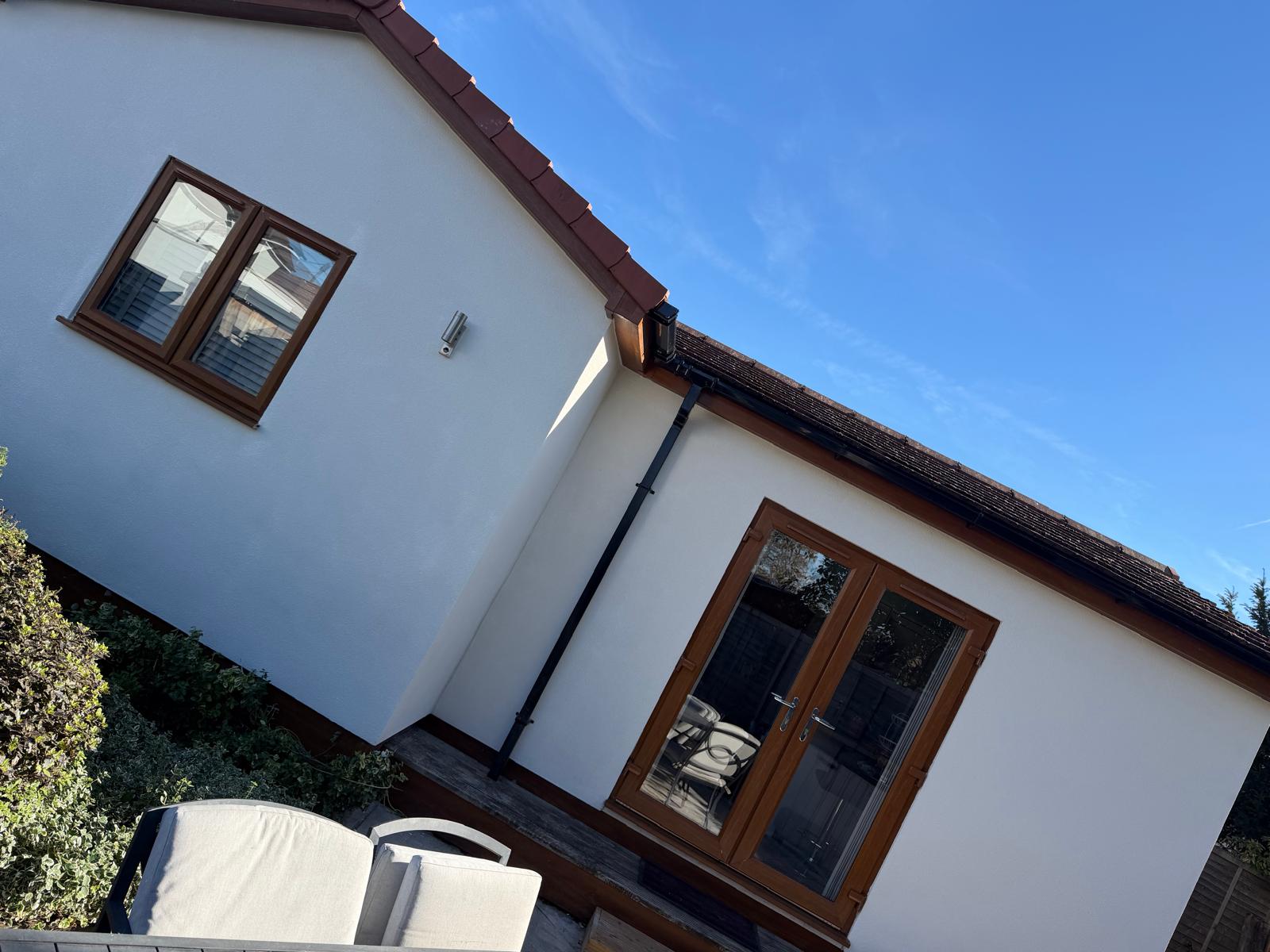
Know exactly what your property needs
Book a free inspection with Robbie. You get a clear written quotation for your guttering renewal before anything is agreed, with no obligation to go ahead.
- Checkatrade member since January 2014
- 1-year workmanship guarantee
- Monday to Saturday, 7am–5pm